

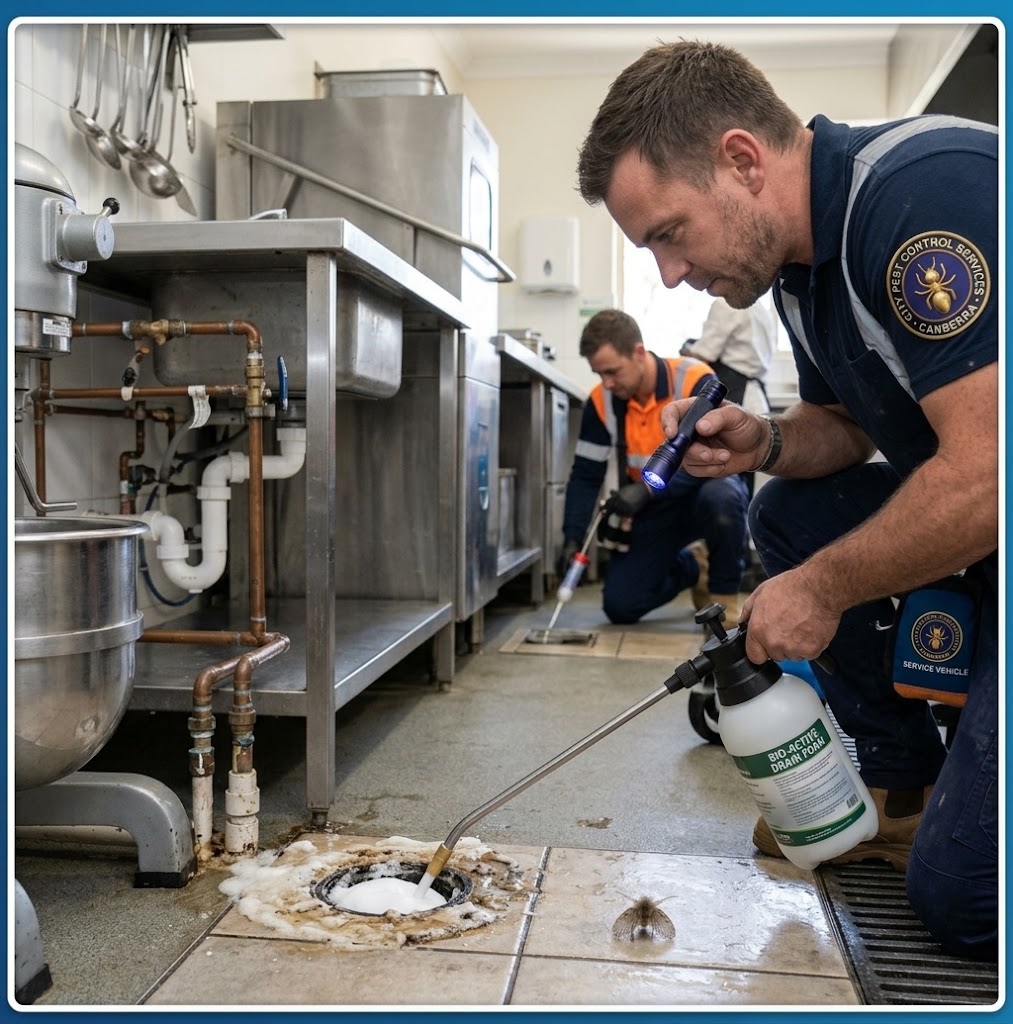
Have you noticed tiny, fuzzy, moth-like insects fluttering around your bathroom sink, kitchen drain, or laundry tub?You’re likely dealing with drain flies (Psychodidae), often referred to as moth flies, sewer flies, or filter flies.
While they don’t bite or spread major diseases like mosquitoes do, drain flies are a sign of stagnant organic matter buildup inside your plumbing. Because they breed in decaying sludge, they can carry bacteria onto your kitchen counters, sinks, and food prep areas.
Here is everything you need to know about why drain flies appear in Canberra homes and businesses—and how to eliminate them for good.
What Are Drain Flies?
Drain flies are small (roughly 2 to 5 mm long) with broad, leaf-shaped wings covered in tiny hairs. They are poor fliers and usually hover close to the sink, shower, or drain where they hatched.
The Life Cycle: Why They Multiply So Fast
Breeding Ground: Female drain flies lay eggs in the gelatinous film that builds up inside drains, grease traps,and sewage pipes.
Rapid Reproduction: A single female can lay up to 600 eggs.
Quick Hatching: Eggs hatch into larvae in as little as 48 hours, feeding on the organic sludge inside your pipes before emerging as adult flies.
Common Causes of Drain Fly Infestations in Canberra
Canberra’s seasonal shifts and property designs create ideal conditions for drain fly activity:
Unused or Infrequently Used Drains: Spare bathrooms, guest rooms, or seasonal outdoor sinks where water sits stagnant in the P-trap.
Organic Buildup: Hair, soap scum, grease, and food particles forming a thick slime layer inside pipes.
Sub-Floor Leaks: Cracked pipes or leaking shower trays underneath the floorboards create damp soil pockets where flies thrive undetected.
Commercial Kitchen Grease Traps: Commercial venues, cafes, and restaurants often face persistent outbreaks due to heavy fats, oils, and grease (FOG) accumulation.
How to Test if Drains Are the Source
Not sure which drain is causing the issue? Try the Tape Test:
Dry the area around your suspected drain completely before going to bed.
Place a piece of clear sticky tape (like Sellotape or painter’s tape) flat across the drain opening, sticky-side down,leaving small gaps for airflow.
Check the tape in the morning. If flies tried to emerge overnight, they will be stuck to the underside.
DIY Steps to Control Minor Drain Fly Issues
If you’ve caught the problem early, try these steps:
Clean the Drain Opening: Remove hair, scum, and debris from the drain cover and pop-up stoppers using a stiff pipe brush.
Flush with Hot Water: Pour boiling water down the drain twice daily for several days to help loosen organic buildup.
Use an Enzyme Drain Cleaner: Avoid harsh chemical bleach or caustic acid, which can damage pipes and often fails to remove the thick gelatinous layer. Instead, use a bio-enzymatic drain cleaner designed to break down organic slime.
Note: Boiling water and DIY hacks only kill surface flies and temporary buildup. If the breeding site is deep within your sewer line or under the foundation, DIY methods will not solve the root cause.
When to Call a Professional Pest Controller
If drain flies keep returning despite regular cleaning, the infestation is rooted deeper in your plumbing system or structural sub-floor.
At City Pest Control Services, we specialize in comprehensive pest management across the Australian Capital Territory. Our professional approach includes:
Thermal & Video Inspection: Identifying hidden pipe leaks, cracked seals, or moisture pockets beneath floors.
Targeted Biological Treatments: Applying commercial-grade foaming enzymes that coat the entire circumference of your pipes, dissolving the breeding gel.
Long-Term Prevention Plans: Tailored solutions for residential properties, cafes, restaurants, and commercial facilities.
Keep Your Property Fly-Free Today
Don’t let a minor drain fly nuisance turn into a full-scale hygiene issue. Contact the experts at Commercial Pest Control Canberra to inspect and treat your drainage systems.
Service Area: Greater Canberra, Belconnen, Gungahlin, Woden Valley, Tuggeranong, and surrounding ACT regions.